Florida is the birthplace of American wine. French Huguenots who settled North America around 1562 made wine from the abundant wild Muscadine grapes they found growing near present day Jacksonville . This is the first recorded reference to wine made from grapes grown in the " New World ". Since that time grape growing and wine production in Florida has continued to develop as an industry. Even such historically notable men as Emile DuBois and the Marquis de Lafayette were once involved.
On arrival at the winery, the grapes are weighed; the sugar and acid content are checked, as well as the pH, in our lab. It is a balance among these elements that determines when grapes are ready to be harvested. Crushing and pressing activities are done outside on our crush deck. As the grapes are emptied into the hopper of the crusher-stemmer, sulfur dioxide is added to inhibit the wild yeast. A set of paddles in the crusher-stemmer separates the stems from the grapes and serrated rollers break the skin so juice can flow. To this point, red and white grapes are handled alike.
The winemaker then inoculates the juice with yeast and adds sugar and the fermentation takes place at a controlled temperature. Our practice is to ferment at 55 to 60 degrees Fahrenheit. This requires two to eight weeks. The relatively low temperature and resultant slow fermentation helps preserve the fruity flavor and delicate aromas of the white grapes. The wine is "racked" several times during the fermentation and again when fermentation is complete. At that time the wine is racked into storage tanks.
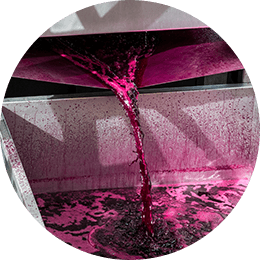
Red grapes are handled a bit differently. After crushing, they are pumped together with their skins and seeds directly to a fermenting tank. The must is then inoculated with yeast and sugar is added if needed. We control the temperature at 75 degrees Fahrenheit throughout the two to three week fermentation. The higher temperature causes a more rapid fermentation than is appropriate for whites. Wine has to be drawn from the tank bottom and pumped over the cap three times daily to percolate and gain full color and flavor from the skins. When the desired color and flavor is achieved (usually 48 hours), the fermenting wine is drawn off, the "cap" is pressed and both are combined in a fermenter to finish their fermentation.
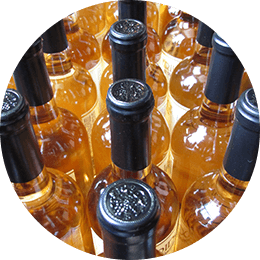
Before any wine is ready for bottling, it must be clarified. This involves filtration to remove the fine suspended solids which make wine cloudy. All young wines, if properly stored, tend to improve somewhat with age. Every wine has its natural life span: it improves during youth, reaches its' prime, and declines in old age. This pattern varies just as wines vary. Many wines are better when young. All table wines lose their freshness and fruitiness if kept too long. In general, 75 percent of the wine produced in the world is as good when a year old as it is ever likely to be and will only deteriorate, not improve, after its third birthday. We recommend that our wines be consumed within two years. Our light, fresh style does not require aging. When you do store wine prior to consuming, we recommend a cool, dark location with a constant temperature.